Not All Bugs Are the Enemy
Beneficial Creatures: Nature’s Built-In Pest Control
What Are Beneficial Creatures?
Beneficial creatures—often called “good bugs”—are insects and organisms that naturally help control harmful pests. Instead of relying solely on chemicals, these natural predators reduce pest populations and support a healthier environment.
These organisms play a critical role in integrated pest management (IPM) by maintaining balance in ecosystems and reducing the need for pesticides.
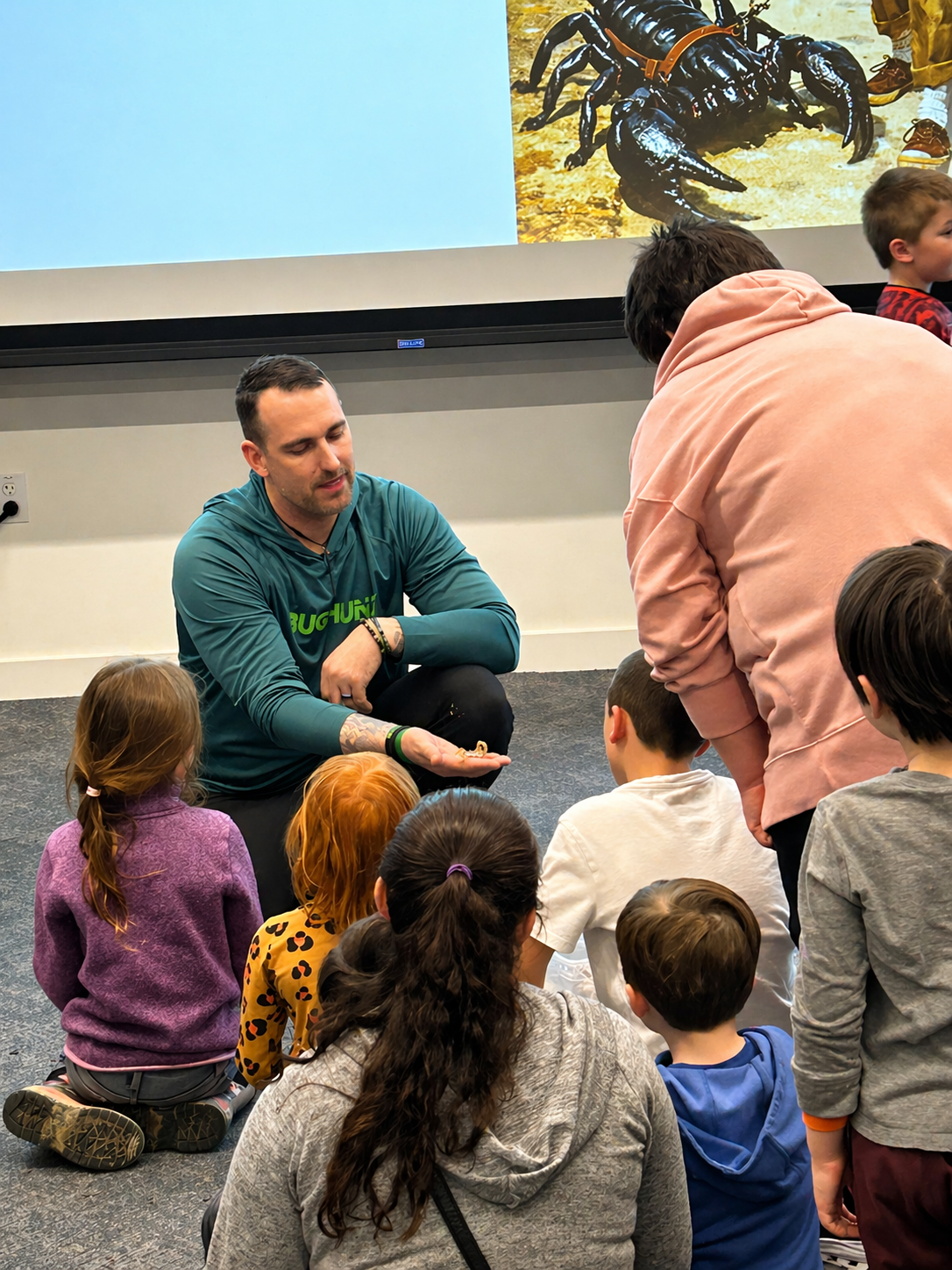
From crawlspace to class room, a Bug Hunter can EXTERMINATE & EDUCATE
Birthday Parties
We'll bring crazy excitement to your party with our large collection of creepy crawlies!
Classroom Lectures
Fun and structured educational presentations for people of all ages!
Public Lectures
Science-based lectured for adults. We have provided presentations for hospitals, libraries, and colleges.
Why Beneficial Creatures Matter
Using beneficial insects is one of the most effective and environmentally friendly pest control strategies available today.
Key Benefits:
- Natural pest control – They feed on destructive insects like aphids, mites, and larvae
- Reduced chemical use – Less reliance on pesticides
- Eco-friendly solution – Safe for families, pets, and plants
- Long-term prevention – Helps maintain a natural balance in your yard or garden
Beneficial insects act as
predators, parasitoids, and decomposers, all working together to keep pest populations under control.
Common Beneficial Creatures
Spiders
What makes Bug Hunt different? We don’t target spiders. They’re mostly harmless, and there has never been a confirmed spider-bite death in New England.
If you’re set on spider eradication, we’ll probably try to talk you out of it—or happily recommend one of our friends.
Butterflies
Some insects are easier to love thanks to their natural beauty. That’s why we’re trained to minimize environmental impact.
Our simple outdoor rule with pesticides: “If it’s pretty and in the sunlight—leave it alone.”
Solitary Wasps
As a rule of thumb, a wasp on its own usually isn’t aggressive. That’s why you can enjoy ice cream at the park while wasps quietly raid trash cans for leftovers.
A lot of big, scary-looking wasps are really just minding their own beezwax.
Mantids
The big, beautiful tanks of the insect world! Spotting a praying mantis in the wild is a treat—and even better if you catch one mercilessly devouring another bug.
Nature can be metal!
Birds of Prey
We use rodenticides with extreme care and thoughtful intention, choosing products and placement strategies that minimize risk to non‑target wildlife. Because birds of prey and other beneficial species can be affected by improper use, we follow strict best‑practice protocols to ensure our work protects homes without harming the ecosystem that surrounds them.
How Beneficial Creatures Help Your Property
Beneficial organisms create a self-regulating pest control system. Instead of eliminating everything, they target only harmful pests—keeping your landscape healthy and balanced.
- Control infestations before they spread
- Protect plants, lawns, and gardens
- Improve soil health and plant growth
- Support pollination and biodiversity
When Beneficial Creatures Aren’t Enough
While beneficial insects are powerful allies, they may not fully eliminate large infestations. That’s where professional pest control comes in.
A balanced approach includes:
- Monitoring pest activity
- Encouraging beneficial populations
- Applying targeted treatments when necessary
Our Approach to Eco-Friendly Pest Control
We believe in working with nature—not against it.
Our pest control programs:
- Identify and protect beneficial species
- Use targeted treatments to minimize environmental impact
- Focus on long-term prevention, not just quick fixes
Protect Your Home the Smart Way
Beneficial creatures are a powerful part of pest control—but having the right strategy makes all the difference.
Need help managing pests while protecting your environment? Contact us today for a customized pest control plan.
Call (603) 858-5299 to learn more about pest control and protecting beneficial species.